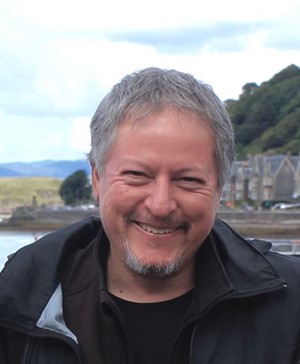
Prof. Michael Lucas
Michael Lucas is Professor Emeritus in Architecture at California Polytechnic State University in San Luis Obispo, California, USA. He will be a Fulbright teaching/research scholar in residence in the Institute for Aesthetics and Art Culture during Winter term 2021.
Michael received a Bachelor of Architecture degree from University of Cincinnati, Ohio which included studies in aesthetics under Jenefer Robinson. His professional design career focused on the Ohio River Valley and Chesapeake Bay regions of the United States. He established a portfolio of sensitive modern urban interventions in the Riverfront Historic District of Covington, Kentucky, the Mt Adams Historic District in Cincinnati, the Fell’s Point, Canton, Federal Hill, and Mt. Vernon Historic Districts in Baltimore, and the Patapsco River mill village of Oella, Maryland. Later he specialized in civic and University projects across the mid-Atlantic states. Built work where he acted as designer earned awards from Cincinnati, Central Pennsylvania, and Baltimore Chapters of the American Institute of Architects, and received publication in Progressive Architecture magazine.
Following his Master of Architecture degree at Morgan State University in Baltimore in 1995, his career has focused on teaching, pedagogy, and research in application of phenomenology. He has taught at Cal Poly since 1997, receiving Tenure in 2004. It is one of the largest architectural undergraduate programs in the world with almost 800 students. His design classes have included the year-long undergraduate Thesis Design Lab and Research Seminar where he was coordinator 2002-2009, and electives making design topics available to the larger university student body, such as Native American Architecture and Place, which is cross-listed with the Ethnic Studies Department. He received the Cal Poly Distinguished Teacher Award in 2008, the first professor from the College of Architecture and Environmental Design to be so honored in almost twenty years. In 2009 he was asked to restructure the year-long Beginning Design studio and lecture sequence for over 300 Architecture and Architectural Engineering students that he coordinated 2009-13.
Michael’s research is in the area of human development and spatial concept formation, place, and identity, specifically looking at the junction of individual tacit, phenomenological, and intuitive knowing with cultural conventions and disclosure of architectural and environmental attitudes. His studies focused initially on Indigenous Pacific Northwest and Puebloan Native American settings, and 20th century American vernacular situations. These interests developed into the areas of eco-phenomenology, and environmental ethics, and expanded to settings as diverse as Finland, Turkey, and the UK, as well as application in his pedagogy.
He has presented his findings at venues of the American Philosophic Association, International Association of Environmental Philosophy, International Institute for Applied Aesthetics, International Qualitative Research Association, American Popular Culture Association, Pecos Conference on Southwest Archeology, Northwest Society of Architectural Historians, Canadian Journal of Environmental Education, Associated Collegiate Schools of Architecture, and National Conference of the Beginning Design Student.
In addition to his academic positions, he served as College of Architecture and Environmental Design Associate Dean for Academic Affairs 2014-2017, and twice as Architecture Associate Department Head. For his contributions to the university, he was awarded the honorary title Emeritus in 2017.
He resides in the coastal town of Morro Bay, California, where in 2021 he concluded a position as a member of the Planning Commission, including the draft of the new city master plan, historic district guidelines, greenhouse gas policy, neighborhood design guidelines, and advocacy for the managed retreat of the town sanitary water system away from its beachfront location and with new technologies, have it play a role in recharging of the depleted regional aquifer.
Activities at IAAC:
- deliver a lecture, Architecture as Gathering Time, at the Coordinates of Aesthetics, Art and Culture 7 conference 11-12 November 2021
- teach a course Survey of American Aesthetics and the Built Environment: Embodiment, Art, Architecture and Place
- teach a course Embodied Aesthetics: Phenomenology, Eco-Phenomenology, Architecture, and the Built Environment
- initiate a research project, Dych Života: Breathing Life into the Slovak Wooden Churches of the Carpathians Mountains: Aesthetics and Embodiment in the Wooden Churches of Slovakia, applying his finding on phenomenological inquiry in field studies of the settings of several of the 17th and 18th century wooden churches in the Bardejov and Dukla Pass areas of Slovakia.