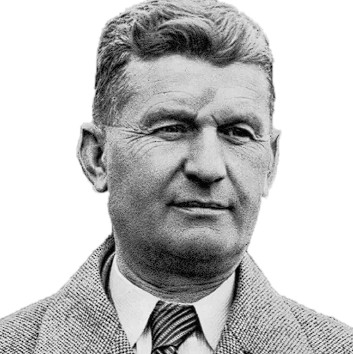
Tomáš Baťa – Entrepreneur and Visionary of Czech and Slovak Economic History
On the occasion of the 150th anniversary of the birth of Tomáš Baťa (3 April 1876), the Department of Economics and Economy commemorated the legacy of one of the most significant figures in Czech and Slovak economic history. Tomáš Baťa was not only a successful entrepreneur, but also a visionary manager, leader, and innovator who fundamentally shaped the development of modern business and corporate management. He transformed traditional shoemaking into a global enterprise, and many of his principles were decades ahead of their time—long before management became an independent academic discipline.
Baťa’s approach to entrepreneurship was based on pioneering organizational and motivational innovations. Individual workshops operated as independent economic units that “sold” semi‑finished products to one another and were responsible for their own economic results. Employees shared not only in profits but also in losses, creating a strong sense of co‑ownership and personal responsibility. In production, Baťa applied principles of assembly‑line manufacturing adapted to the specific nature of the footwear industry, while in commerce he introduced the now‑legendary prices ending in nine, whose psychological effect became a global retail standard.
Equally significant was his impact on the development of management, trade, and corporate social policy. Baťa emphasized that a company’s true capital lies in its people, which led him to establish the Baťa School of Work, where future managers were systematically educated in close connection with practical experience. He pursued vertical integration of production—from raw materials to distribution—thereby reducing costs and dependence on intermediaries. Alongside the establishment of international branches, he also built entire company towns with high‑quality housing, schools, healthcare, and cultural facilities.
Baťa’s entrepreneurial philosophy is aptly captured by his well‑known motto: “Our customer, our master.” For Baťa, profit was not an end in itself, but a natural consequence of honest, efficient, and socially responsible service.