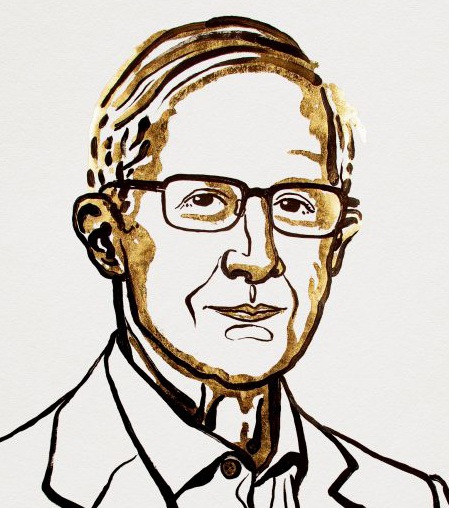
Economics in the Service of Climate: The Legacy of Nobel Laureate William Nordhaus
On the occasion of March 5th – World Energy Efficiency Day, the Department of Economics and Economy commemorates the significant contributions of American economist William Dawbney Nordhaus, recipient of the 2018 Nobel Prize in Economic Sciences (In that year, the Nobel Prize in Economics was awarded to William Nordhaus and Paul Romer for the implementation of key topics into economic growth models). Nordhaus was honored for "integrating climate change into long-run macroeconomic analysis," fundamentally transforming how we perceive the nexus between energy, economy, and climate protection.
His climate-economic models, most notably the DICE model (Dynamic Integrated Climate-Economy), demonstrate that energy efficiency and emission reductions are among the most effective tools for mitigating climate change, while remaining essential for long-term economic growth.
Nordhaus has long emphasized that the transition to more efficient energy technologies is inextricably linked to properly set economic incentives—particularly carbon pricing. By reflecting the true environmental costs, carbon pricing motivates companies to modernize energy systems and reduce their dependence on fossil fuels. His research thus creates a robust bridge between energy policy, economic theory, and climate science, perfectly embodying the spirit and message of this day.