
Key note speakers
DO YOU KNOW ENPAIR? | Conference announcement | Important dates | Key note speakers | Venue | Registration | Submissions
Social programme | Conference program | Traveling to Bratislava | Hotels in Bratislava
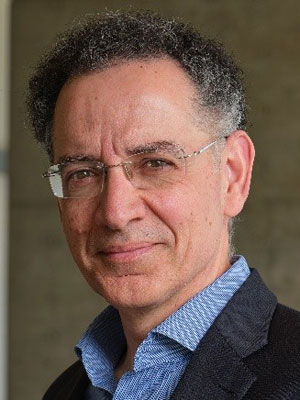
Prof. Timothy C. Papadopoulos, Department of Psychology and Center for Applied Neuroscience, University of Cyprus, Cyprus
Timothy C. Papadopoulos, Ph.D., is a Professor at the Department of Psychology, University of Cyprus, and a founding member of the Center for Applied Neuroscience. He pursued his graduate studies in Educational Psychology at the University of Alberta, Canada, where he also worked as a Research Associate at the JP Das Developmental Disabilities Centre.
His research aims to understand neurodevelopmental disorders and their treatment, specifically (a) various optimal and protective factors for specific learning disorders, focusing on development, cognitive profiles, and pathology, (b) similar components for attention deficit hyperactivity disorder (attention, executive functioning, inhibition, and processing speed) and (c) the effects of web-based cognitive remedial programs. His research programs employ a range of methods, including eye-tracking, EEG, training paradigms, and cognitive and behavioral assessments.
The Cyprus Research and Innovation Foundation bestowed Prof. Papadopoulos the Distinguished Researcher Cyprus Research and Innovation Award in 2019. In 2024, Prof. Papadopoulos was elected a Fellow of the International Academy for Research in Learning Disabilities (IARLD) in recognition of his research on neurocognitive processes and assessment in learning disabilities. For more information and selected publications, https://www.ucy.ac.cy/directory/en/profile/tpapadop
KEY NOTE: “Cracking the ‘Black Box’ of Reading: What Neural Data Reveal Beyond Behavior”
Abstract: Phonological ability (PA) and rapid automatized naming (RAN) are among the most robust cognitive predictors of reading development and reading difficulties. Extensive behavioral evidence supports their role; however, the neural mechanisms underlying these constructs remain less clearly specified, particularly across different task conditions and levels of processing. In this keynote, I present recent work that addresses these issues from a neurocognitive and methodological perspective.
First, I examine how identifying the most informative neural components of phonological awareness strengthens its predictive power across two task conditions: initial and final phoneme elision. Second, I introduce an integrative framework that combines neurophysiological and eye-movement data through Fixation-Related Potentials (FRPs), to capture children’s cognitive processing during serial RAN tasks, a format that poses well-known challenges for conventional analysis. The presentation also outlines the application of machine-learning techniques to identify neural components in EEG data associated with the two PA conditions and to extract spatiotemporal RAN-related neural congruency components. These components differentiate between children with dyslexia and chronological age controls. The talk highlights the value of refined analytical approaches and multimodal data integration for improving our understanding of the neural foundations of reading and reading difficulties.

Associate Professor Lenka Krejčová, Dys-centrum, Primary school Poznávaní, Praha, Czech Republic
Lenka Krejčová, Ph.D., is a Czech educational psychologist specializing in cognitive approaches to learning, assessment, and inclusive education. She was an associate professor of educational psychology at the Faculty of Arts, Charles University in Prague, where she was engaged in teaching and research focused on learning processes, metacognition, and the application of cognitive science in education.
Her academic and publication activities address topics such as dynamic assessment, learning potential, and support for learners with diverse educational needs, with a strong emphasis on connecting research findings to classroom practice. In parallel with her academic career, Lenka Krejčová serves as the director of DYS-centrum Prague, a non-profit organization providing assessment, counselling, and therapeutic services for children, adolescents, and adults with specific learning and behavioural difficulties, including dyslexia and ADHD.
In this role, she is involved in clinical practice, methodological development, and international projects, contributing to the advancement of evidence-based support systems in education. She is also a co-founder, a member of the school management, a school psychologist and a career counsellor in Poznávání laboratory school, where she integrates research, innovation, and inquiry-based learning into everyday teaching.
KEY NOTE: “Laboratory Schools as Bridges Between Cognitive Science and Educational Practice”
Abstract: Laboratory schools represent a unique interface between educational research and everyday pedagogical practice, functioning as dynamic environments where innovation, experimentation, and evidence-based teaching converge. This keynote explores the role of laboratory schools as living research sites that integrate insights from cognitive science into curriculum design and instructional strategies.
Drawing on the example of the Poznávání laboratory school, established in 2019 as a private, research-oriented institution, the presentation situates laboratory schools within a broader “mind, brain, and education” framework that connects neuroscience, psychology, and pedagogy to enhance learning outcomes. Central to this discussion is the cognitive approach to education. The keynote examines how science-based principles, research outcomes and cognitive theory are operationalized in classroom settings through differentiated instruction, formative and dynamic assessment, and targeted support for neurodiverse learners.
Particular attention will be given to how collaboration between educators and researchers enables continuous data-informed refinement of teaching practices, creating a reciprocal “win–win” relationship that advances both scientific inquiry and educational quality. The final part of the keynote highlights inquiry-based learning as a core mechanism through which cognitive principles are enacted in laboratory school curricula. By illustrating these integrative practices, the keynote argues that laboratory schools serve as accessible models for aligning rigorous research with meaningful educational innovation.