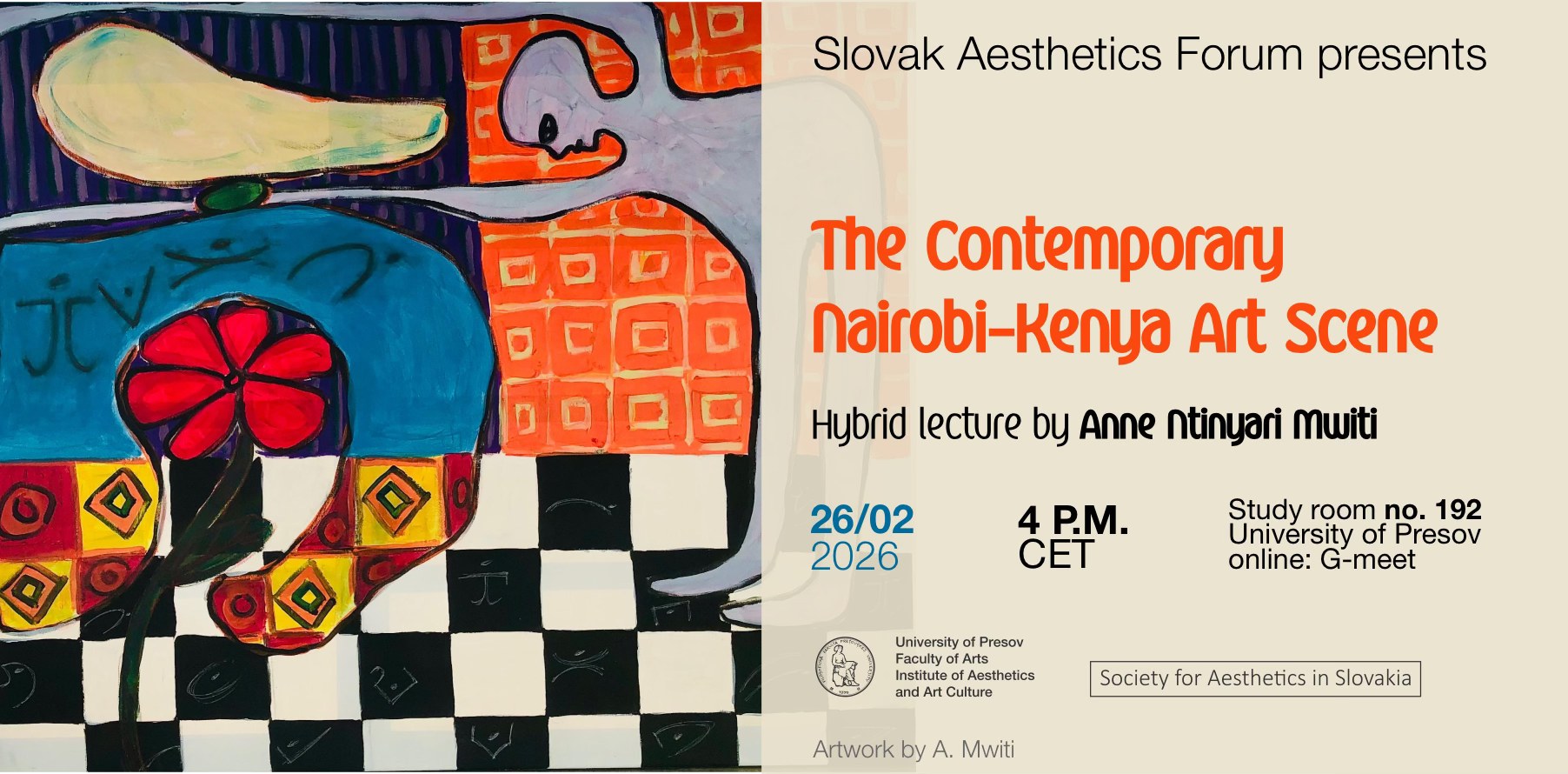
Slovak Aesthetics Forum with Anne Mwiti (Kenyatta University, Nairobi, Kenya)
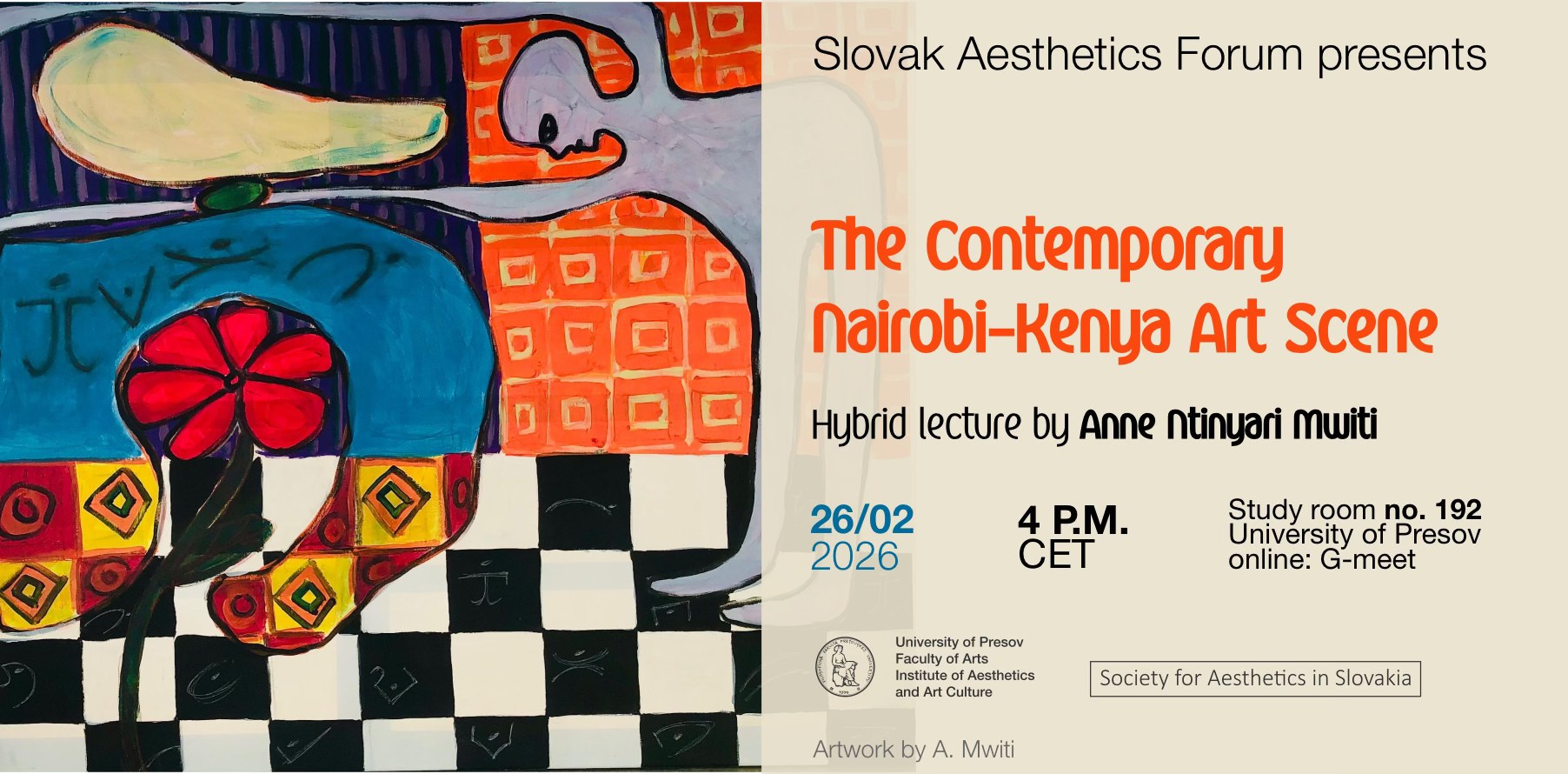
The Contemporary Nairobi-Kenya Art Scene
February 26 (Thursday) at 4:00 p.m. (CET)
Google Meet: https://meet.google.com/fto-bqjd-ixx
On site: University of Presov, Faculty of Arts, study room 192.
Lecture is funded via Erasmus+ KA171 programme.
Concept:
Nairobi’s art scene is a vibrant tapestry of creativity, reflecting the diverse cultural heritage of Kenya. Much of this cultural verve is centered in Kenya's capital city Nairobi, which has emerged as a palpable creative hub.
For many years, the cultural spotlight in Africa has seemed to be stubbornly focused on the west or south of the continent rather than East Africa.
And yet from Sudan and Ethiopia to Somalia, Kenya and Tanzania, this large, ancient and multifaceted region is brimming with unique histories, peoples and stories.
From contemporary galleries show casing emerging talent to dynamic cultural festivals that bring communities together, the city is a hub of artistic expression.
Art in Nairobi is more than just paintings on gallery walls—it is a living, breathing expression of the city’s identity. You will find bold murals in the streets of Kibera Art District, breathtaking sculptures in public spaces, and exhibitions that challenge societal norms.
Popular galleries like the Nairobi Gallery, Circle Art Agency, and Banana Hill Art Gallery, One Off, Red Hill are all keeping busy with exhibitions running regularly every month. The same is true for the foreign art centers like the Alliance Francaise, Goethe Institute and Italian Institute of Culture, all of which are sought after sites that typically have a lot of traffic from the Central Business District. Even the Russian Embassy periodically mount exhibitions of Kenyan art. Unfortunately, the visual art scene in Kenya has had virtually no support from government.
Largely determined by the Western gaze, Kenyan contemporary art is still not widely recognized on the global art scene. Not long ago, scholars who studied African art had little to say on the subject, apart from taking note that local venders still sell wooden figurines to tourists which these pundits called ‘airport’ or ‘souvenir’ art. Historically, it was West Africa that was most widely acknowledged as the home of authentic ‘African’ art.
After all, it was Westerners like Picasso and Matisse who had confirmed that something incredible was happening on the Western side of the continent. Independent South Africa was said to be coming up fast, but in the East, little was understood to be happening at all. These stereotypes still persist today, although the situation in East Africa, particularly in Kenya, is changing rapidly. Still, few people in the media (scholars aside) have had time (or inclination) to engage this development. Margareta Gacheru
The city boasts the annual East African Art Auction, the largest in the region that has taken place since 2013. This auction has put the city on the contemporary art map in Africa despite stiff competition from Cape Town, South Africa and Lagos, Nigeria.
Nairobi is also an anchor for those fleeing conflict across the region. In the process, they have created one of the continent's most exciting art scenes.